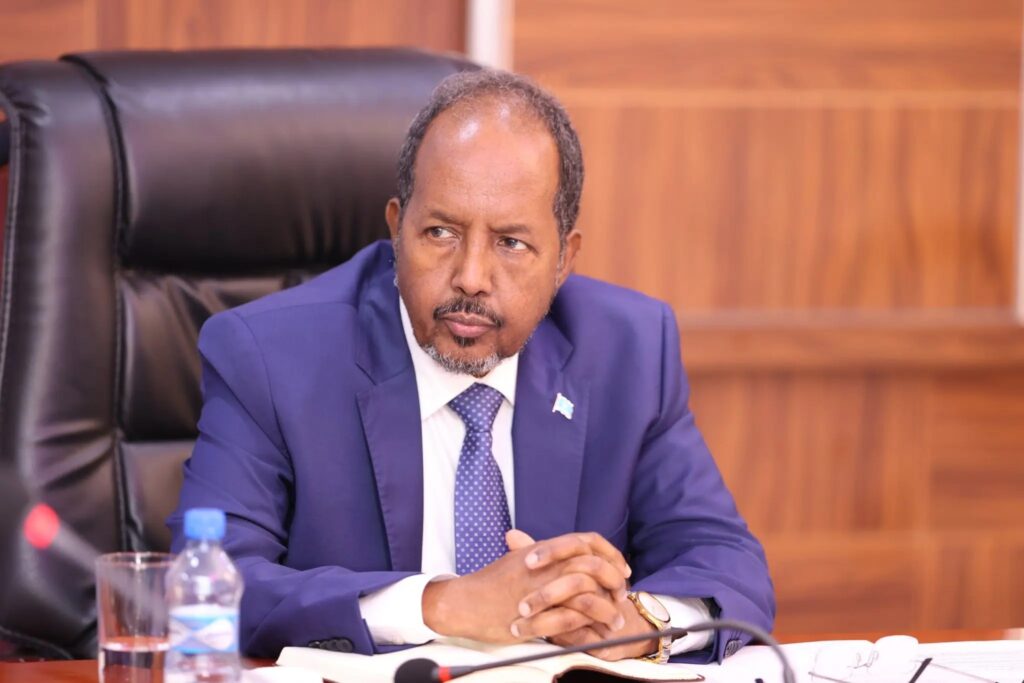
Since the re-election of President Hassan Sheikh Mohamud in May 2022, the Federal Government of Somalia has made significant strides across nearly all of the six key areas the president outlined in his campaign agenda: Unity and Reconciliation, Peace and Security, Good Governance, Institutional Reform, International Cooperation, and Humanitarian Response. Yet, despite undeniable achievements, there remains a concerning pattern in Somali discourse—successes are dismissed or ignored, while shortcomings are amplified and politicized.
This article aims to outline those major gains and ask the critical question: Why are we so quick to celebrate failure, yet so hesitant to acknowledge progress?
1. Unity and Reconciliation: SSC-Khatumo and the Hargeisa Secession Crisis
In 2023, President Hassan Sheikh’s administration made bold moves in the face of Somaliland’s secessionist ambitions. The controversial Memorandum of Understanding (MoU) signed between the Somaliland administration and Ethiopia in early 2024, which suggested Ethiopian access to the port of Berbera, was swiftly nullified by Somalia’s federal government. The move reinforced Somalia’s sovereignty over its territory and sent a strong diplomatic message to Addis Ababa and Hargeisa.
Moreover, the federal government formally recognized SSC-Khatumo as a federal state-level administration in September 2023, following violent clashes between SSC forces and Somaliland troops in Las Anod. The Somali government also declared its role as a neutral arbitrator in the internal dispute—treating it like any other domestic clan conflict—emphasizing the nation’s unity and legitimacy of federalism. This intervention resulted in a ceasefire and the exchange of prisoners, showcasing Somalia’s potential for inclusive conflict resolution.
2. Peace and Security: The War Against Al-Shabaab
Under President Hassan Sheikh’s leadership, Somalia has witnessed its most ambitious anti-terror campaign since the fall of the central government in 1991. Working alongside local clan militias (known as “Macawiisley”), international partners, and the Somali National Army (SNA), the government has liberated more land from Al-Shabaab in Galmudug, Hirshabelle, and Middle Shabelle than any prior administration.
Notably:
Al-Shabaab, now cornered in pockets of Jubaland and Southwest State, launched a desperate assault on Aadan Yabaal in April 2024, but failed to maintain control—highlighting their waning capacity. According to the Ministry of Defense, over 3,000 terrorists were neutralized in 2023 alone.
3. Good Governance and the Fight Against Corruption
While critics continue to accuse the administration of corruption—some of which have been substantiated—the government has taken unprecedented steps to enforce rule of law and transparency. President Hassan Sheikh has shown a willingness to challenge political elites, including:
This approach underscores a shift toward institutional integrity over political appeasement—a bold stance in a nation where politics has often been driven by clan calculations and foreign pressure.
4. Institution Building: Reforming the National Army
In August 2023, Somalia celebrated the lifting of the three-decade-long UN arms embargo, a milestone achieved through rigorous diplomacy and military reform. The government began restructuring the Somali National Army to be loyal to the state, rather than political factions. Key developments include:
President Mohamud’s administration dismantled the previously politicized and bloated army structure (often estimated at over 6,000 men loyal to the previous government) to create a disciplined national force under a unified command.
5. International Cooperation: Reclaiming Somalia’s Place
Somalia’s diplomatic presence has seen a remarkable boost:
6. Humanitarian Action: A Rapid Response to Crisis
Upon taking office, President Hassan Sheikh inherited a nation ravaged by its worst drought in four decades, with over 7.8 million people in need of aid. In June 2022, he appointed veteran politician Abdirahman Abdishakur as his Special Envoy for Drought Response.
Key successes include:
Conclusion: A Question of Narrative and Bias
Despite these achievements, public discourse—both on social media and in international commentary—often focuses more on the administration’s shortcomings than its gains. While constructive criticism is vital for democratic growth, the failure to recognize legitimate progress not only undermines national morale but emboldens spoilers who benefit from instability.
Somalia is far from perfect, and there remains much to be done. However, President Hassan Sheikh Mohamud’s second term has marked a period of bold action, institutional recovery, and national reassertion.
It’s time for the Somali people, the media, and international observers to recalibrate the narrative. Instead of celebrating failure, let’s acknowledge success—because for Somalia, every step forward counts.